CARVED,
NOT
CAST.
Limestone, marble, and granite shaped by hand into pieces that outlast the people who commission them.
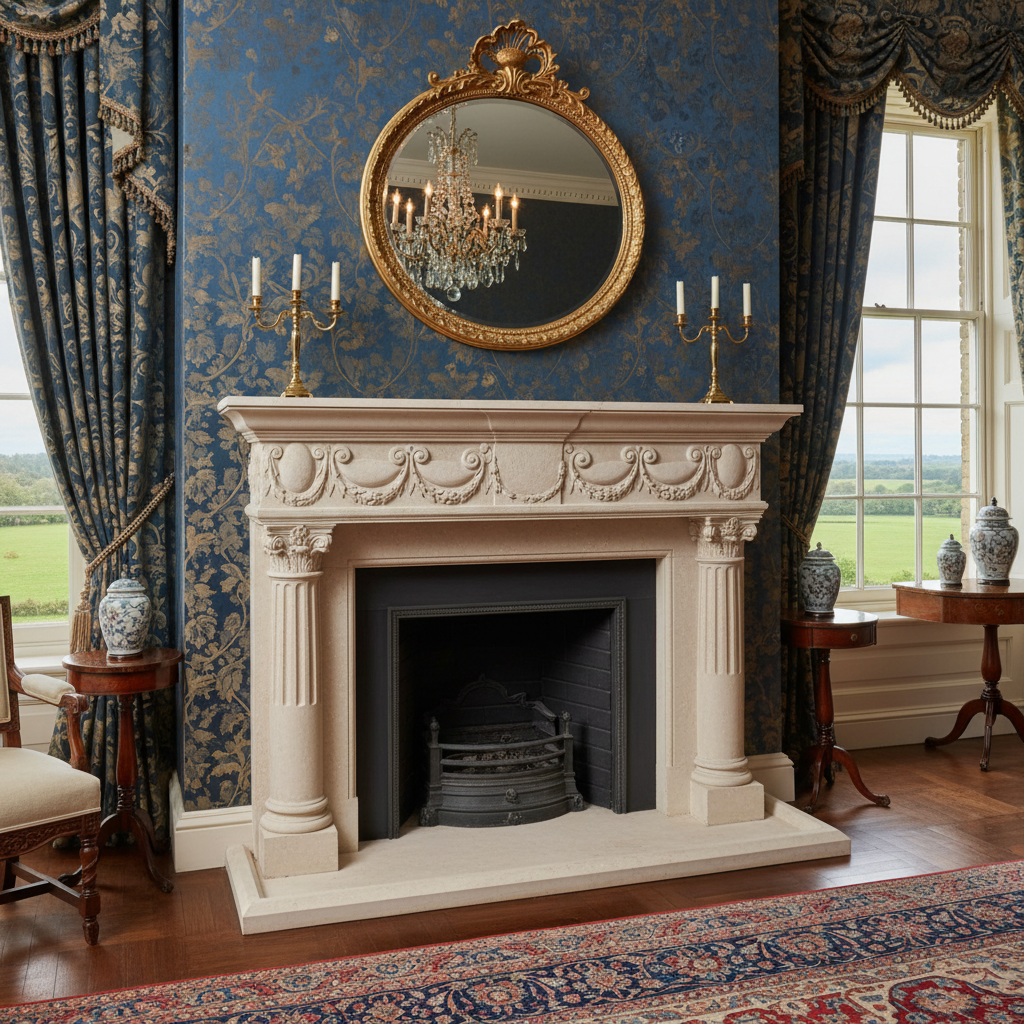
A drawing room hearth for a Grade II listed manor, Wiltshire.
The conservation architect's brief was unambiguous: replace a Victorian cast-iron insert with a period-appropriate Portland limestone surround, hand-carved to match the original egg-and-dart cornice running the length of the room. No shortcuts. No CNC. The stone was selected from a single quarry bed in Dorset.
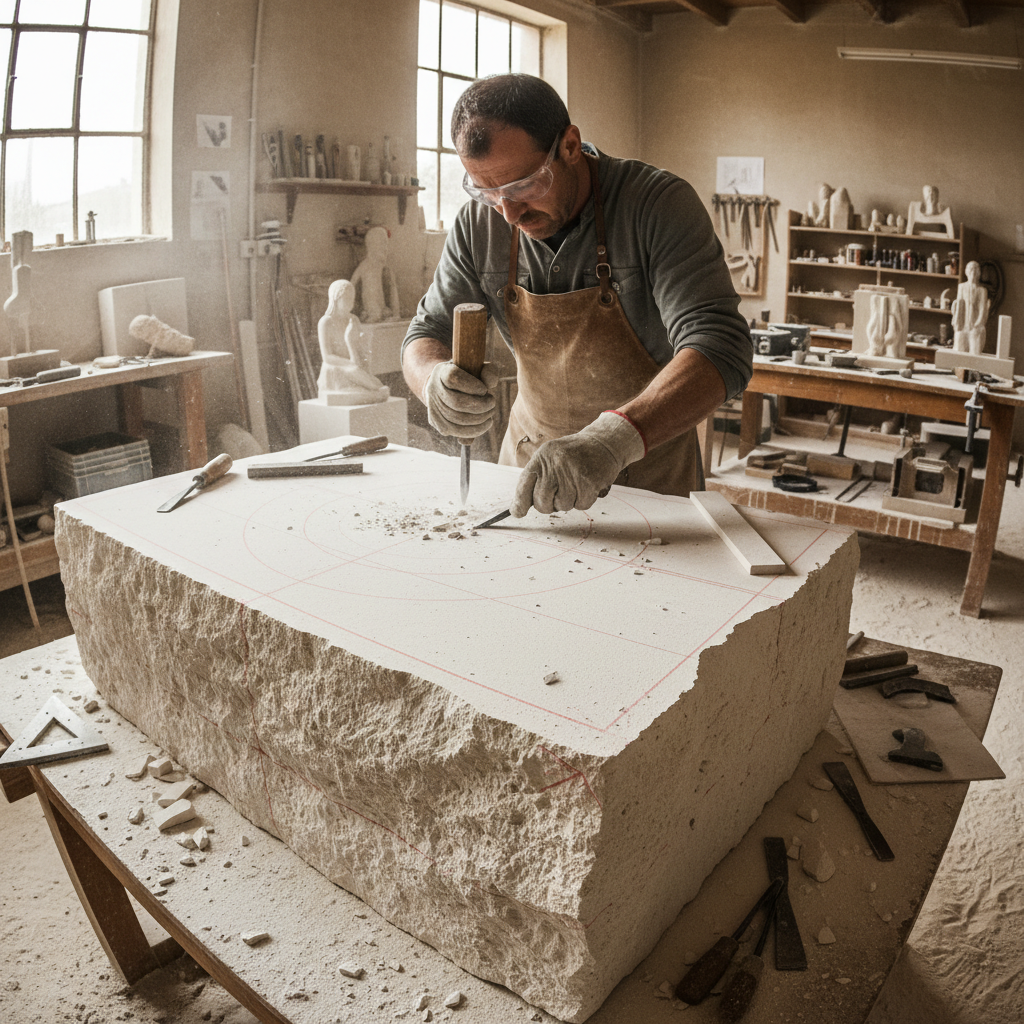
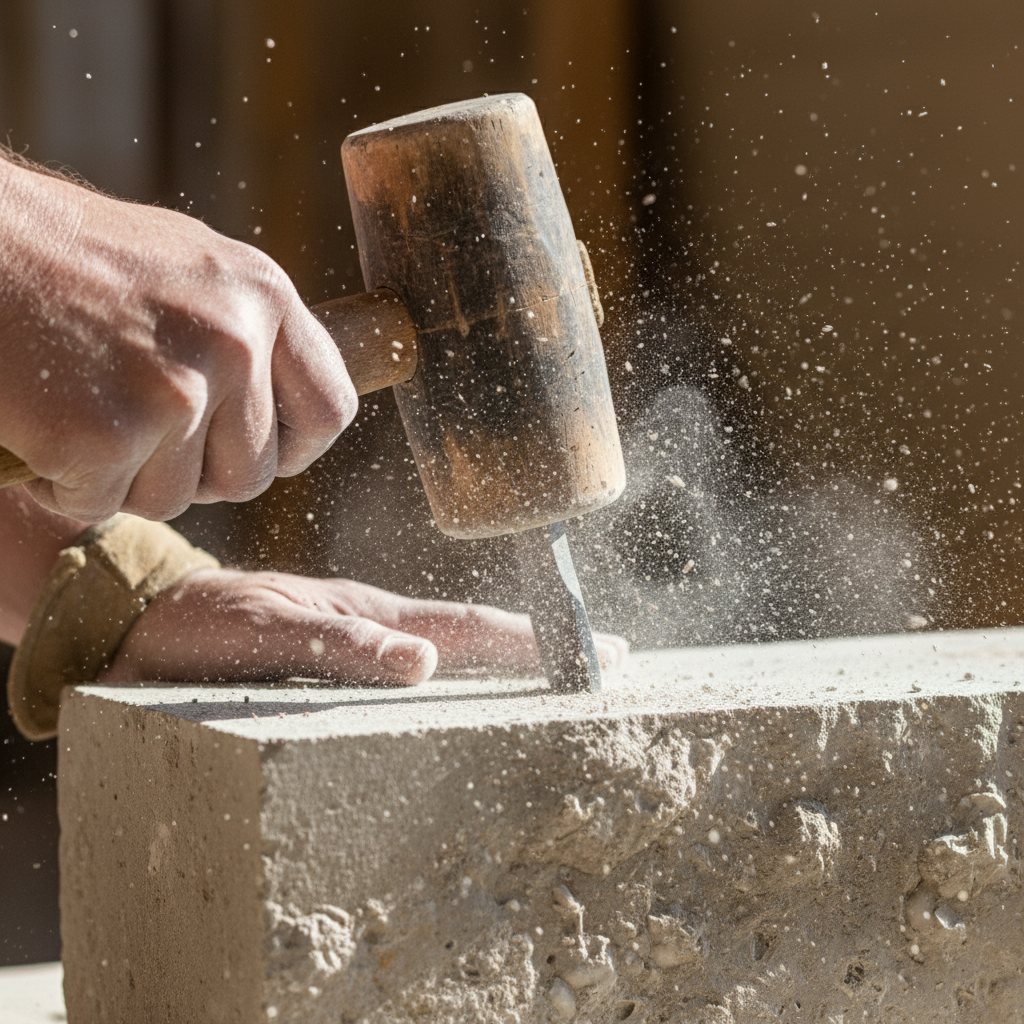
Setting-out lines were drawn directly onto the block in chalk before the first cut. The moulding profile was carved in stages — rough work with a 2-inch bolster, finished with a 3⁄8-inch gouge. Total workshop time: eleven weeks.
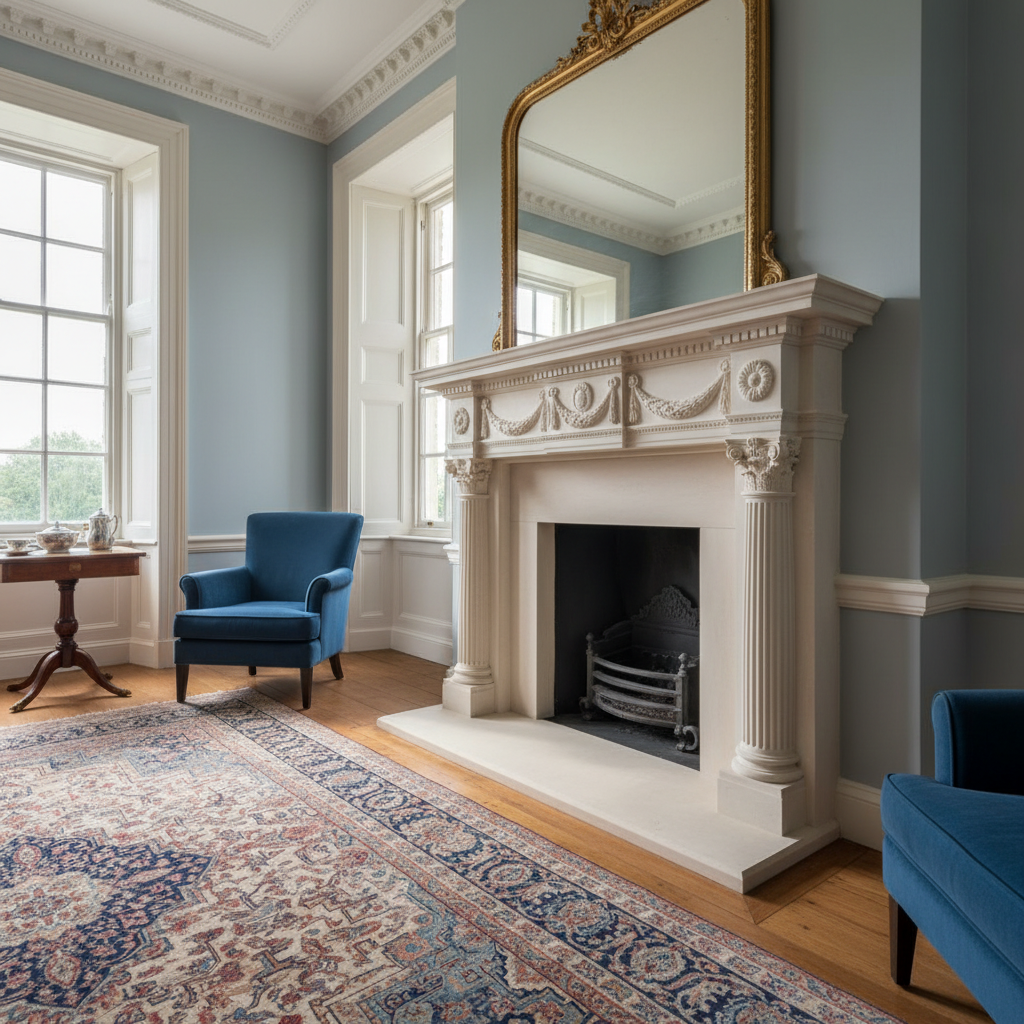
The surround is indistinguishable from the original Georgian work. The conservation officer passed it on first inspection. I've been recommending Chisel to every heritage client since.
Margaret Holloway
Heritage Architect · Holloway & Associates, Bath
A carved heraldic crest for the entrance hall of a Northumberland estate.
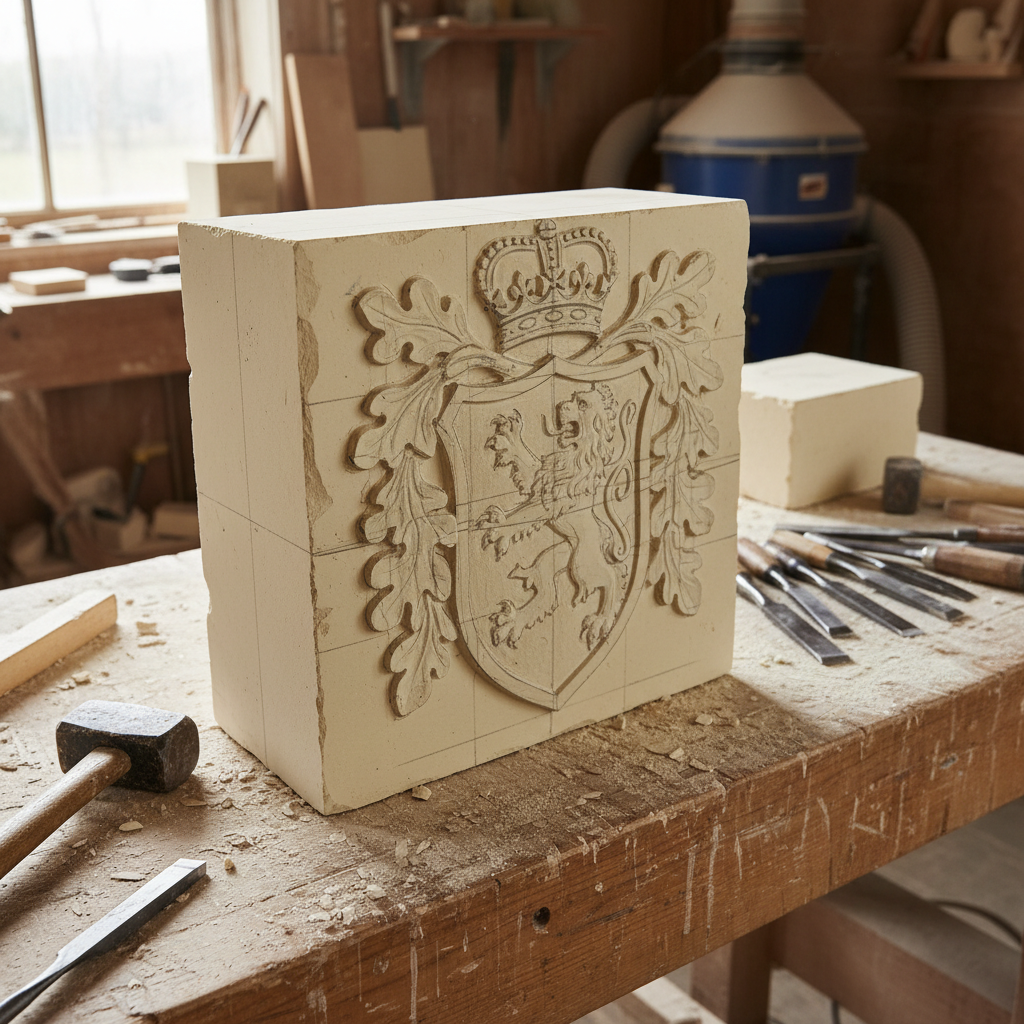
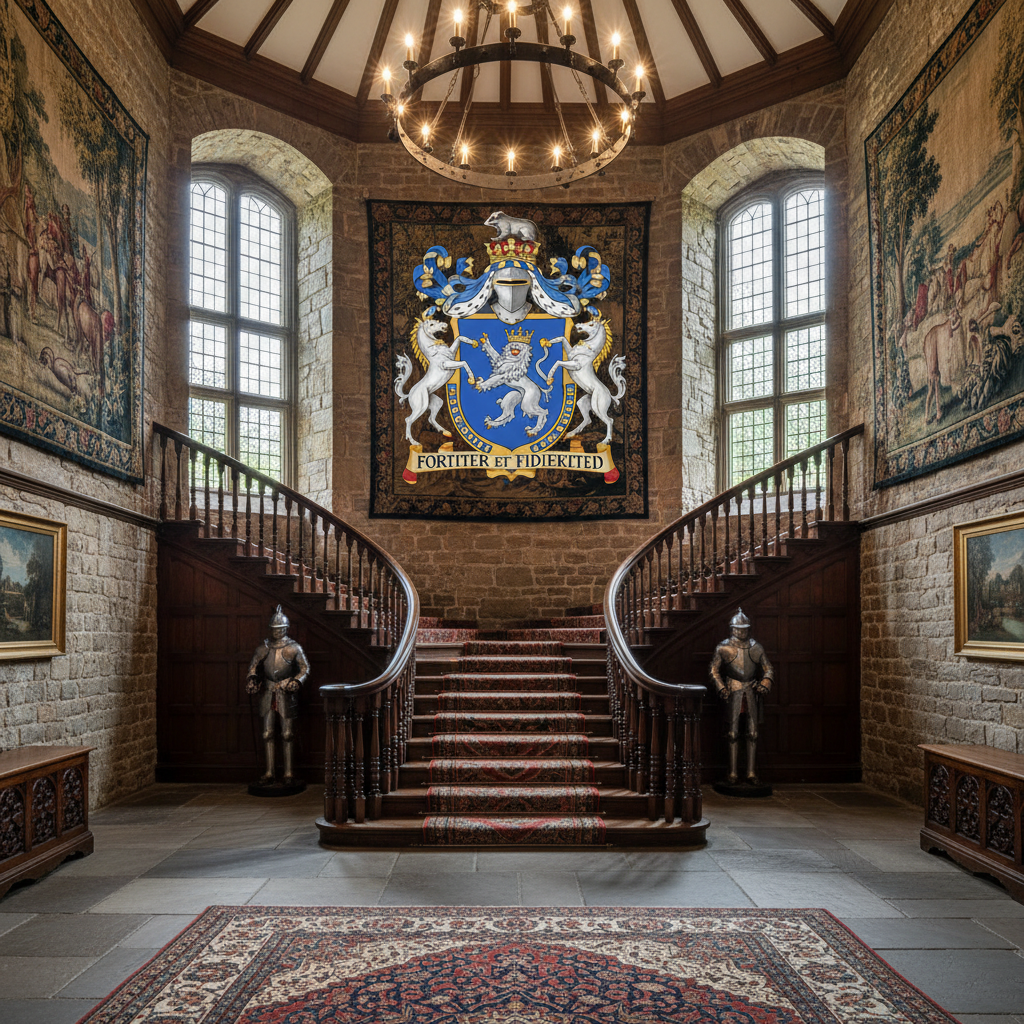
The commission came through an interior designer whose client had acquired a 17th-century Northumberland estate and wished to restore the original heraldic panel above the main staircase. Working from a single surviving engraving in the family archive, we reproduced the 1.2-metre crest in Caen stone — the same material used in the original.
Stone Selection
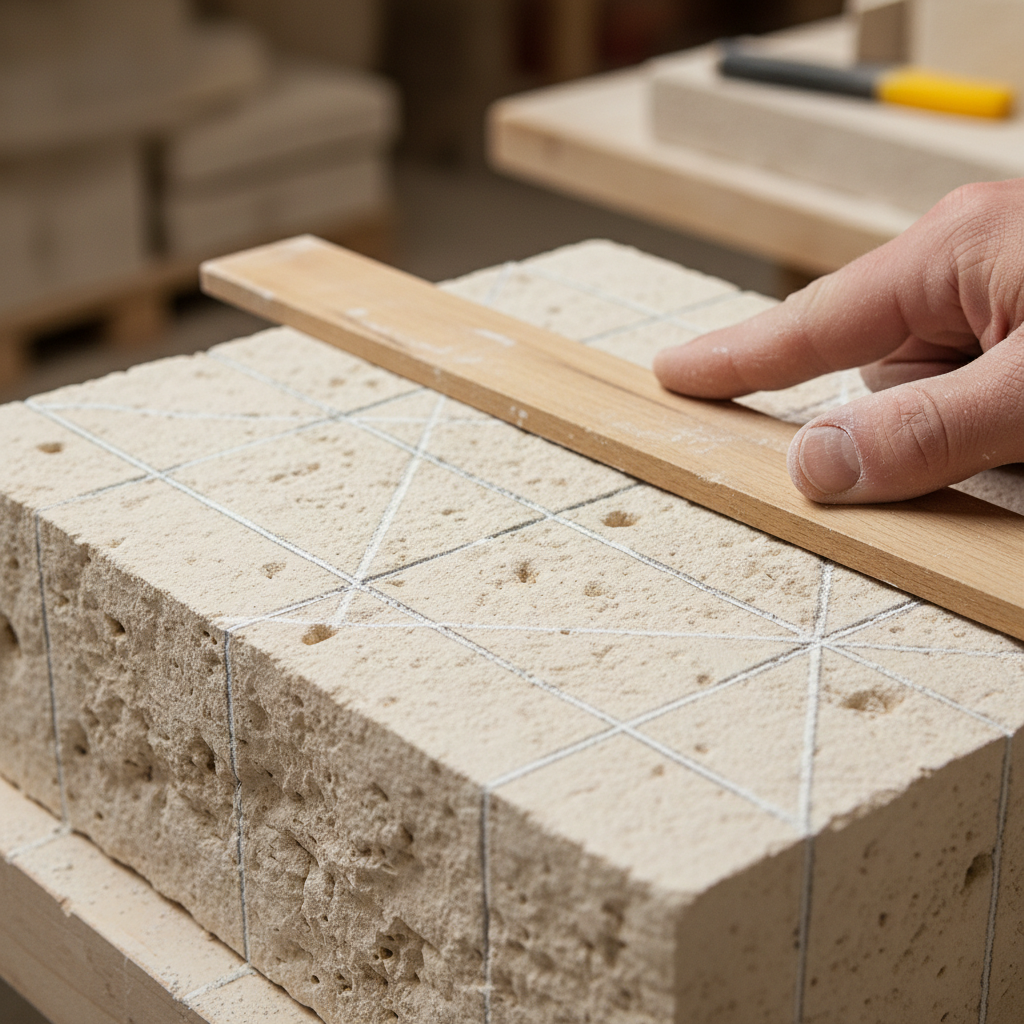
Three Caen stone samples were assessed under raking light before selection. The chosen block matched the undertone of the surviving original stonework precisely — a warm cream with a faint honey cast under afternoon light.
"My clients asked whether we'd sourced the panel from an antiques dealer. When I told them it was carved this year, they didn't believe me. That's the standard Chisel works to."
Dominic Ashworth-Clarke
Interior Designer · Ashworth Studio, London
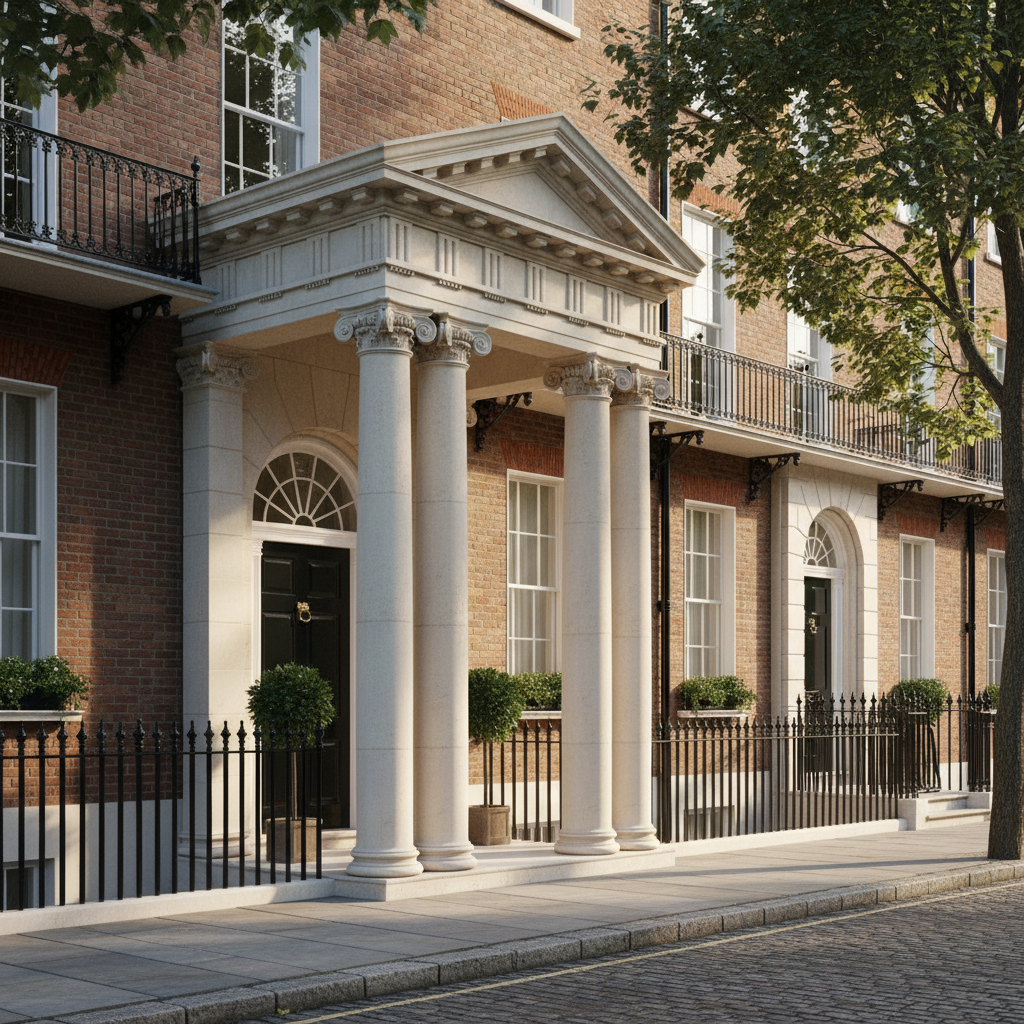
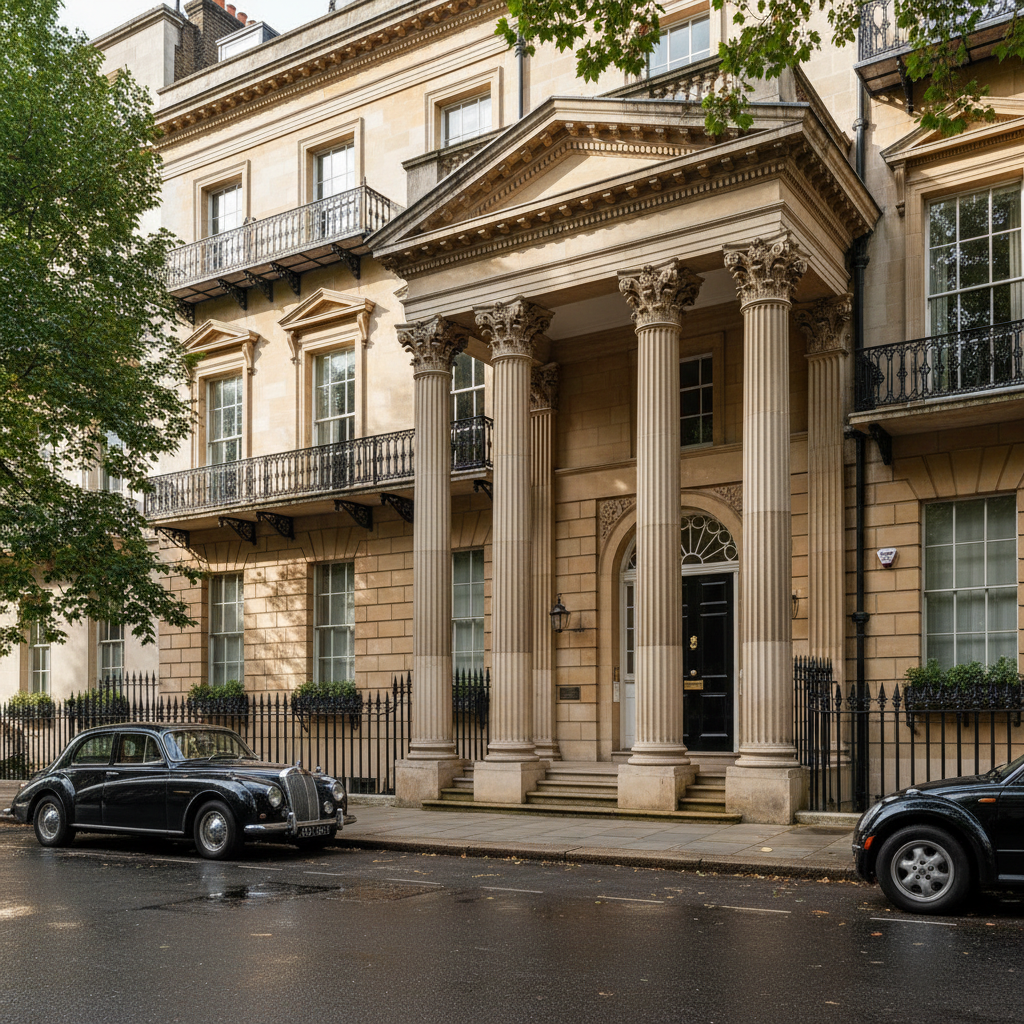
A full neo-classical portico for a Grade II listed Kensington townhouse.
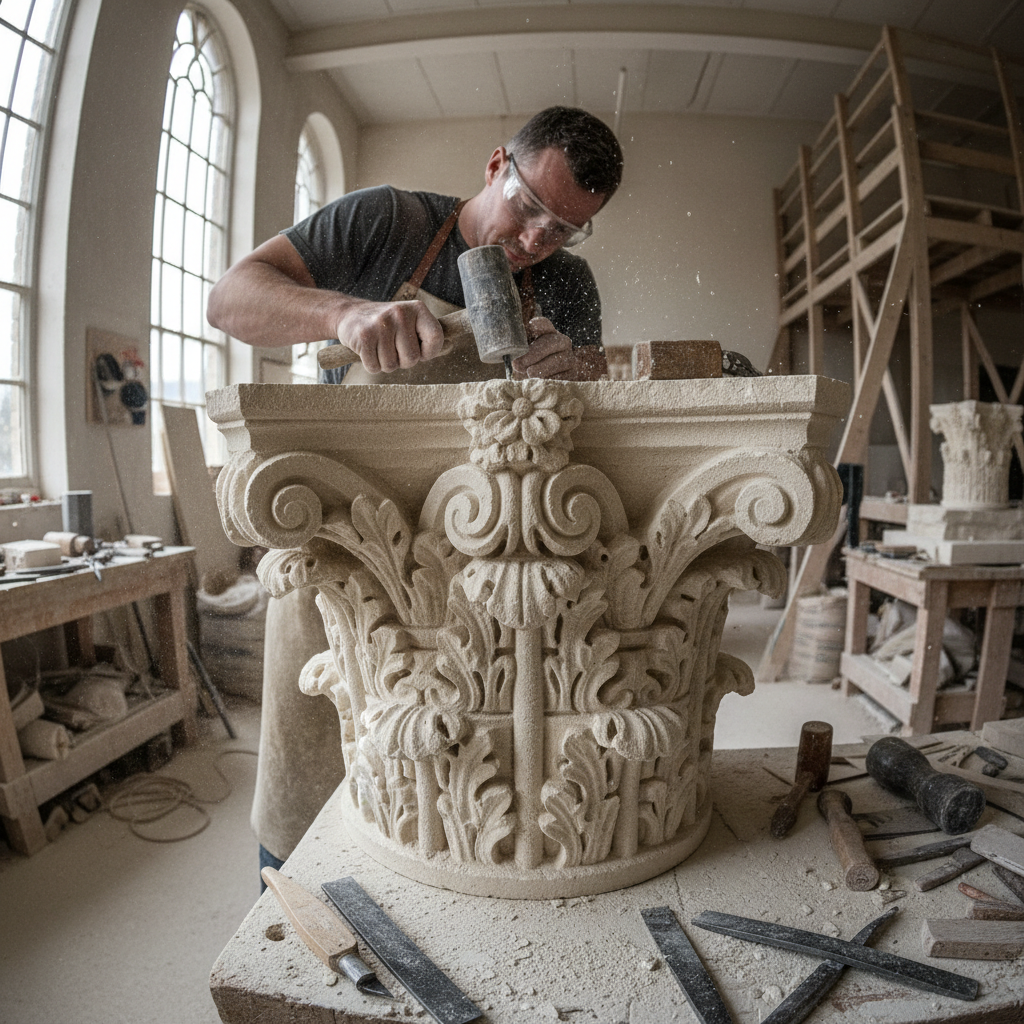
The developer's conservation architect needed a Portland stone portico — four Ionic columns, entablature, and carved pediment — that would pass Historic England scrutiny. The existing Victorian addition had been removed, leaving a raw brick façade. The new portico needed to read as original, not restoration.
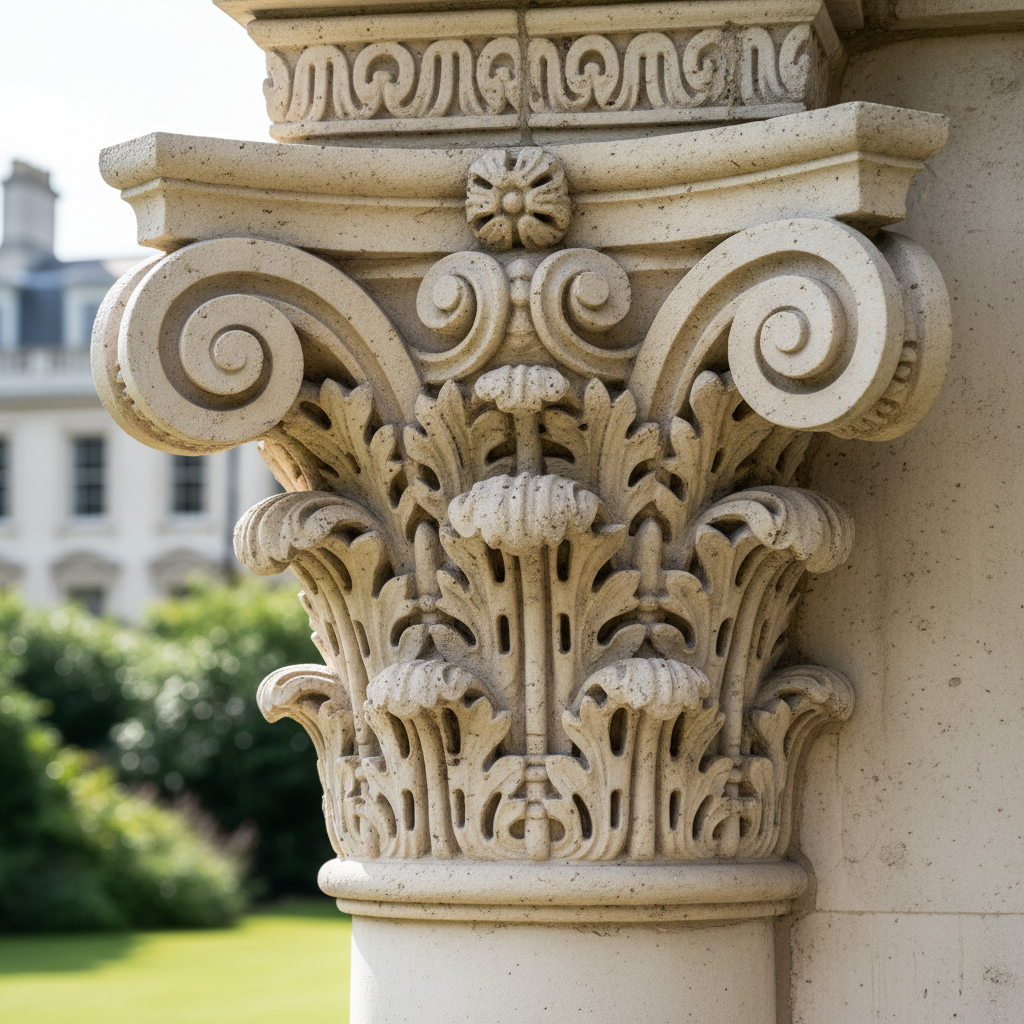
We spent three weeks in the British Museum studying Ionic capital proportions before cutting the first block. The acanthus leaves on the column bases were carved by hand, each taking four days to complete. The conservation board passed the installation without amendment.
Scope of Works
Forty years of commissions, bound in one document.
The Chisel Portfolio Book is a 64-page document covering thirty-seven commissions from 1991 to present — fireplaces, archways, façades, garden monuments, and interior carved panels. Suitable for conservation board submissions and client presentations.
Download the Portfolio Book
Enter your email and we'll send the PDF directly. No newsletters, no follow-ups unless you ask.
Your details are not shared with any third party.